ZWO
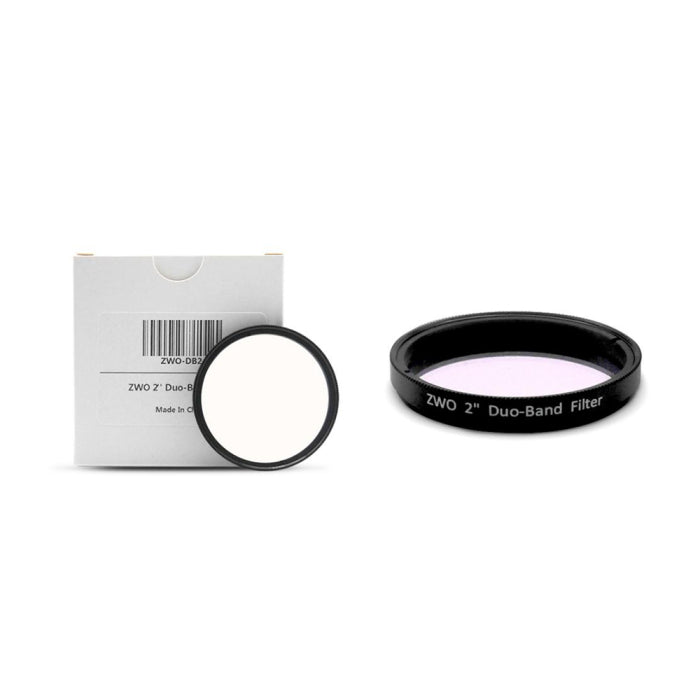
ZWO 2" Duo-Band Filter
SKU:
Low stock: 1 left
Couldn't load pickup availability
You have a color camera. You want to shoot nebulae. But everyone online keeps saying "you need a narrowband filter."
So you look up narrowband filters. And you find out they only work properly with monochrome cameras. Not your camera.
Now what?
This is exactly where the ZWO 2" Duo-Band Filter comes in.
This filter is built specifically for one-shot color (OSC) cameras — like color CMOS cameras and DSLRs. It passes two key emission lines at the same time — Hydrogen-Alpha at 656.3nm and Oxygen III at 500.7nm. Everything else, including the orange glow from Pakistani city lights, gets blocked.
You get deep contrast. You get vivid nebula colors. And you get all of it in a single exposure — no separate channels, no filter wheel required.
Sky Deep Co is Pakistan's only authorized ZWO dealer. We stock this filter for color camera astrophotographers across Pakistan. Only 1 piece is left right now.
Is This Filter Right for You?
Before you scroll to the specs, answer these three quick questions. They will tell you in 30 seconds if this filter is the right buy.
Question 1: Do you use a color camera?
If yes — this filter is made for you. The ZWO 2" Duo-Band Filter works with one-shot color cameras, cooled color CMOS cameras, and modified DSLRs. If you use a monochrome camera and want Ha, OIII, and SII separately, check our 1.25" Narrowband Filter Set instead.
Question 2: Do you shoot from a city or suburb with light pollution?
If yes — you need this filter. Pakistani cities like Lahore, Karachi, Faisalabad, and Islamabad have heavy light pollution. Streetlights, billboards, and traffic lights wash out faint nebula signals. This filter cuts all of that out and only lets the nebula light through.
Question 3: Do you want colorful nebula images without buying three separate filters?
If yes — this is your answer. A full narrowband setup needs three filters, a filter wheel, a monochrome camera, and hours of extra processing. The Duo-Band filter gives you Ha and OIII in one glass. One filter. One session. One stunning image.
If you answered yes to all three — add this to your cart. Only 1 piece is left.
What Does "Duo-Band" Actually Mean?
A regular broadband filter reduces overall light pollution. It lets in a wide range of light but blocks the worst offenders like mercury vapor lamps.
A narrowband filter only lets in one very specific wavelength. One filter — one emission line. Very precise, but you need separate filters for each channel.
A duo-band filter sits in the middle. It lets in two specific wavelengths at the same time — Ha and OIII. These two emission lines cover the most important signals in the most popular deep-sky targets: nebulae.
Here is the clever part. On a color camera sensor, Ha light falls on the red pixels. OIII light falls on the green and blue pixels. So when your camera captures a single frame through this filter, it already separates the two signals on different colored pixels. No filter wheel. No extra sessions. Just one shot — with both signals captured together.
This is why astrophotographers call color cameras used this way "one-shot color" or OSC cameras. The Duo-Band filter is the perfect companion for this style of imaging.
Technical Specifications
Every detail you need before you buy:
| Specification | Detail |
|---|---|
| Thread Size | 2 inch (M48) |
| Passband 1 | H-alpha — 656.3nm |
| Passband 2 | O-III — 500.7nm |
| FWHM (Bandpass) | 15nm — both Ha and OIII |
| Glass Material | Schott glass (German optical glass) |
| Coatings | Multi-layer anti-reflection coatings |
| Primary Use | Light pollution rejection for emission nebulae |
| Best With | One-shot color cameras and modified DSLRs |
| Also Works With | Monochrome cameras with 2" filter threads |
| Price | Rs. 48,165 PKR |
| Stock | Low stock — only 1 left |
What Comes in the Box?
Simple and clean. Inside your Sky Deep Co package:
- ZWO 2" Duo-Band Filter — the main filter unit
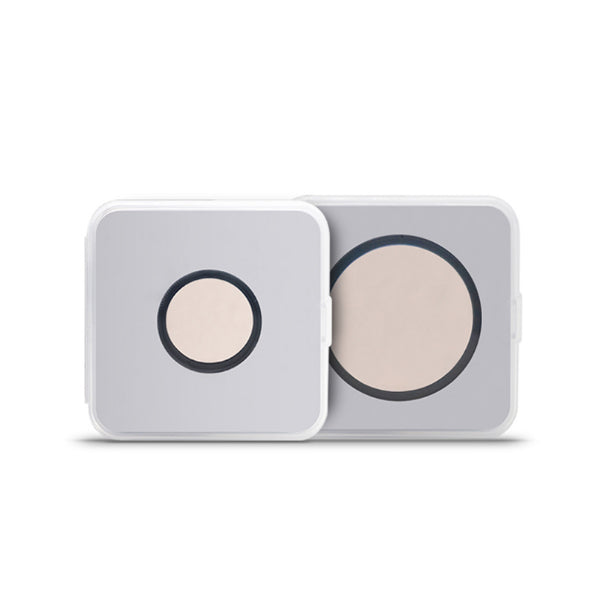
- Protective Plastic Case — keeps the filter safe when not in use
The 15nm Bandpass — Wide Enough for Color Cameras
You may notice this filter has a 15nm FWHM bandpass — wider than the 7nm on our narrowband set. This is not a weakness. It is intentional.
Color cameras have a Bayer array — a pattern of red, green, and blue pixels. When the bandpass is too narrow, not enough light hits the green and blue pixels on a color sensor. The image becomes noisy and loses color information.
A 15nm bandpass hits the sweet spot for color cameras. It is still tight enough to block almost all artificial light pollution. But it is wide enough to give your color sensor enough signal on all pixel colors. The result is vibrant, well-exposed nebula images without the color imbalance you get from very narrow filters on color cameras.
What Can You Shoot with This Filter?
The ZWO 2" Duo-Band Filter works best on emission nebulae — glowing clouds of hydrogen and oxygen gas in space. Here are some targets visible from Pakistan:
The Orion Nebula (M42) — Winter months. One of the brightest and most dramatic nebulae in the sky. Ha light shows the core structure while OIII reveals the surrounding blue wisps. Both captured in one shot.
The Rosette Nebula (NGC 2237) — Also winter. A large, round nebula shaped like a flower. Perfect for the Duo-Band filter — the Ha shows the red petals and OIII highlights the blue center region.
The Cygnus Wall and Veil Nebula — Summer months. These targets are massive in the sky. With a wide-field telescope or camera lens, the Duo-Band filter pulls out incredible detail in the hydrogen and oxygen gas regions.
All of these targets are reachable from Pakistani cities with this filter on your color camera. Visit our deep space imaging collection to find the right telescope to pair with it.
Color Camera + Duo-Band + Wide-Field Lens — A Complete Starter Setup
Many Pakistani astrophotographers start with this exact combination:
A Nikon or Canon DSLR lens — 50mm, 85mm, or 135mm. Wide field of view. Captures large nebulae in a single frame.
A ZWO cooled color camera — replaces your regular camera body. Cools the sensor down to reduce noise in long exposures.
The ZWO 2" Duo-Band Filter — connects between the lens and camera using a filter drawer.
A camera tracker mount — follows the stars and keeps your image sharp during long exposures.
This is a setup many people start with and love for years. Browse our cooled color cameras to find the right camera for this filter. And if you use a Nikon lens, check the ZWO Filter Drawer for Nikon Lens — it sits between your Nikon lens and ZWO camera and holds this 2" filter perfectly.
Duo-Band vs Narrowband — Which One Do You Actually Need?
This is the most common question we get at Sky Deep Co. Here is a quick comparison:
| ZWO Duo-Band Filter | ZWO Narrowband Filter Set | |
|---|---|---|
| Camera Type | Color (OSC) cameras | Monochrome cameras |
| Channels | Ha + OIII together | Ha, OIII, SII — separate |
| Filter Wheel Needed? | No | Yes |
| Images Per Session | One shot captures both | Three separate sessions |
| Processing Complexity | Simple | Advanced |
| Best For | Beginners and intermediate | Advanced imagers |
| Price | Rs. 48,165 | Rs. 127,965 |
If you are just starting out with a color camera — choose the Duo-Band. If you already own a monochrome camera and want full Hubble Palette images — go for the narrowband filter set.
Still unsure? Book a free consultation with our team. We will look at your camera and tell you exactly which filter to buy.
Why Buy from Sky Deep Co?
Sky Deep Co is Pakistan's only authorized ZWO dealer. Every ZWO product you buy from us is 100% genuine — original glass, original coatings, original performance. Not a copy. Not a grey-market unit.
We offer free nationwide delivery — Lahore, Karachi, Islamabad, Peshawar, Multan, anywhere in Pakistan.
We offer free gear consultation — before your purchase and after. Our team helps you use your gear correctly, not just sell it to you.
We are the Official Learning Partner of the Lahore Astronomical Society — which means real astronomers stand behind what we recommend.
New to astrophotography? Start with our Astro Learning Hub. It explains cameras, filters, telescopes, and mounts in simple language — made for Pakistani beginners. Completely free.
Want to know more about us? Read about Sky Deep Co here. Or contact us directly — we respond quickly and we love talking about astrophotography.
FAQs — ZWO 2" Duo-Band Filter
Q1. Can I use this filter with my DSLR camera?
Yes — but your DSLR needs to be modified (astro-modified) for best results. Stock DSLRs have an internal filter that blocks a lot of Ha light. A modified DSLR has that filter removed. If your DSLR is unmodified, you will still get some Ha signal but less than a modified camera. For full performance, pair this with a ZWO cooled color camera. Contact us if you want guidance on your specific camera.
Q2. What is the difference between a Duo-Band filter and a regular light pollution filter?
A regular broadband light pollution filter cuts some unwanted light but still lets in a wide range of wavelengths. It gives a mild improvement. The Duo-Band filter is much more aggressive — it only passes two very specific wavelengths: Ha at 656.3nm and OIII at 500.7nm. Everything else is blocked. The result is a much darker sky background and much brighter nebulae in your images.
Q3. Do I need a filter wheel to use this filter?
No. That is one of the biggest advantages of the Duo-Band filter. Because it passes Ha and OIII simultaneously, your color camera captures both signals in a single exposure. No filter wheel needed. Just screw the filter into your telescope focuser or use it with a filter drawer for your camera lens setup.
Q4. Can I also use this filter with a monochrome camera?
Yes — technically. With a monochrome camera, you would capture a combined Ha+OIII signal in a single frame. But you cannot separate the two channels in processing. Most monochrome camera users prefer individual Ha and OIII filters for full control. If you own a monochrome camera, the narrowband filter set gives you better results. Not sure what you need? Book a free consultation with us.
Q5. I shoot from Lahore. Will this filter actually make a difference?
Yes — a massive difference. Lahore has serious light pollution. Without a filter, your nebula images will have an orange gradient across the entire frame. With the ZWO 2" Duo-Band Filter, that orange glow disappears almost completely. Your nebula pops against a dark, clean sky background. Many of our customers in Lahore use this exact filter and are blown away by the results. Visit our Astro Learning Hub to see what is possible from Pakistani cities.