Skip to product information
1 of 4

ZWO

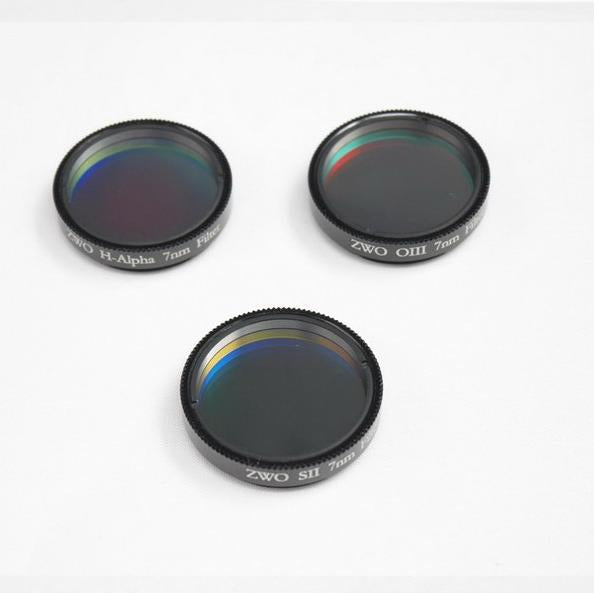
ZWO 1.25" Narrowband Filter Set - Ha, OIII, SII

ZWO 1.25" Narrowband Filter Set - Ha, OIII, SII

Regular price Rs.127,965 PKR
Regular price Sale price Rs.127,965 PKR
Sale Sold out

SKU:

Low stock: 1 left

Quantity

Your images from the city look washed out. The sky looks orange. Stars are there — but the nebulae you want to capture are completely hidden behind light pollution.

This is the problem every Pakistani astrophotographer faces. Lahore, Karachi, Islamabad — all of them have serious light pollution. And a regular camera, even a good one, cannot see through that orange glow.

The ZWO 1.25" Narrowband Filter Set — Ha, OIII, SII changes that completely.

These three filters do not just reduce light pollution. They block almost everything except the exact light that comes from nebulae. The result? You can shoot from the middle of a city and still capture nebulae with stunning detail, high contrast, and vivid color.

Sky Deep Co is Pakistan's only authorized ZWO dealer. We stock this filter set for serious deep-sky imagers. Only 1 piece is left in stock right now.

First, Let Us Understand What Ha, OIII, and SII Actually Are

Most beginners see "Ha, OIII, SII" and feel confused. Let us break it down in plain language.

When gases in space get heated by nearby stars, they glow. But they do not glow in all colors. Each gas glows in one very specific color — or wavelength of light. Scientists call these emission lines.

Ha = Hydrogen-Alpha. Hydrogen gas glows in a deep red color. Most nebulae in space contain hydrogen. So the Ha filter captures the structure and shape of a nebula better than anything else. It gives you the "skeleton" of the nebula.

OIII = Oxygen III. Doubly ionized oxygen glows in a blue-green color. This filter captures the glowing shells and wisps around stars. It adds depth and a completely different layer of detail to your image.

SII = Sulfur II. Sulfur gas glows in a red color very close to Ha — but not identical. It reveals different parts of the nebula. It shows you structures that Ha alone cannot.

When you combine all three in processing, you get a full-color image that shows three completely separate layers of a nebula. This technique is called the Hubble Palette — the same color mapping used by the actual Hubble Space Telescope. That is why narrowband images look so dramatic and otherworldly.

What Makes This Filter Set Special

7nm Bandpass — Very Tight, Very Selective

The most important number on a narrowband filter is the FWHM — Full Width at Half Maximum. Think of it as how narrow the filter's "window" is.

This filter set has a 7nm FWHM on all three filters — Ha, OIII, and SII. 7nm is a very tight bandpass. It means the filter only lets through a 7-nanometer-wide slice of light. Everything else — including streetlights, sodium vapor lamps, and LED lights — gets blocked.

The tighter the bandpass, the darker the sky background in your image, and the more your nebula pops. 7nm gives you excellent contrast even from heavily light-polluted Pakistani cities.

Schott Glass — German Optical Precision

The glass used in these filters comes from Schott — a German company that makes some of the finest optical glass in the world. Schott glass is used in scientific instruments, telescopes, and professional cameras.

What does this mean for your images? It means the glass itself does not distort the light passing through it. Stars stay sharp and round. There is no color fringing. The image quality stays clean from edge to edge.

Multi-Layer Anti-Reflection Coatings

Every filter in this set has multi-layer anti-reflection coatings on both sides. These coatings stop light from bouncing around inside the filter and creating ghost images or halos around bright stars. This is especially important when you have a bright star near your nebula target.

Full Technical Specifications

Specification Detail
Thread Size 1.25 inch
Filters Included Ha (Hydrogen-Alpha), OIII (Oxygen III), SII (Sulfur II)
Bandpass (FWHM) 7nm — all three filters
Glass Type Schott glass
Coatings Multi-layer anti-reflection coatings
Primary Use Deep-sky imaging of emission nebulae
Compatible With All monochrome cameras and filter wheels with 1.25" threads
Price Rs. 127,965 PKR
Stock Low stock — only 1 left

What Comes in the Box?

Your Sky Deep Co order includes:

  1. ZWO Ha 1.25" Filter
  2. ZWO OIII 1.25" Filter
  3. ZWO SII 1.25" Filter
  4. Protective Plastic Case — keeps all three filters safe when not in use

Who Is This Filter Set Made For?

This is not a beginner filter. Let us be honest about that.

The ZWO 1.25" Narrowband Filter Set is designed for monochrome camera users. If you use a color camera — like a DSLR or a color CMOS camera — this set is not the right choice for you. Color cameras already have a Bayer color filter array built in, and narrowband filters do not work well with them for SHO imaging.

This set works best with a ZWO cooled monochrome camera. Monochrome cameras capture every pixel in grayscale. You shoot three separate frames — one through Ha, one through OIII, one through SII. Then you combine them in software to create one full-color image.

If you are ready for monochrome imaging, browse our cooled monochrome cameras to find the right camera for this filter set.

If you are still using a color camera and want narrowband capability, check out our multi-band filters. They are specifically designed for color cameras and give you a similar sky-glow-cutting effect with a single filter.

What Targets Can You Shoot with This Set?

Narrowband filters work on emission nebulae — clouds of gas in space that glow. These are some of the most beautiful targets in the night sky. Here are a few that are visible from Pakistan:

The Orion Nebula (M42) — visible in winter. One of the most photographed nebulae in the world. Ha and OIII together give you incredible detail here.

The Lagoon Nebula (M8) — visible in summer. A massive glowing cloud in the Sagittarius region. SII adds beautiful golden tones to this target.

The Eagle Nebula (M16) — home of the famous Pillars of Creation. This is where SHO narrowband imaging truly shines. The three channels reveal completely different structures in the same nebula.

All of these are reachable with a telescope and a ZWO monochrome camera from Pakistan. Visit our deep space imaging collection to find the right telescope for these targets.

You Also Need a Filter Wheel

To use three separate filters efficiently during an imaging session, you need a filter wheel. A filter wheel holds all three filters and lets you switch between them automatically — without touching your camera.

Browse our camera accessories collection for compatible ZWO filter wheels. Our team can also recommend the right wheel for your specific camera and setup.

If you are building your first monochrome imaging system from scratch, book a free consultation with Sky Deep Co. We will help you plan your entire setup — camera, telescope, mount, and filters — all in one conversation.

Why Buy from Sky Deep Co?

Sky Deep Co is the only authorized ZWO dealer in Pakistan. Every ZWO filter, camera, and accessory we sell is 100% genuine. You get real ZWO products with proper specs — not copies sold by unauthorized sellers.

We offer free nationwide delivery across Pakistan. We offer free gear consultation before and after your purchase. And we offer pre-order booking with 10–20% advance — so even if stock runs out, you can reserve your unit.

We are also the Official Learning Partner of the Lahore Astronomical Society. Real astronomers work with us. Real astrophotographers buy from us.

Learn more about Sky Deep Co — and why Pakistan's astronomy community trusts us. Or if you have a question right now, contact us directly. We respond fast.

New to all of this? Our Astro Learning Hub explains everything from the beginning — in simple language, completely free.

 FAQs — ZWO 1.25" Narrowband Filter Set Ha OIII SII

Q1. Can I use this narrowband filter set with my DSLR or color camera?

No — not for SHO Hubble Palette imaging. Narrowband filters like Ha, OIII, and SII are designed for use with cooled monochrome cameras. If you have a color camera, check our multi-band filters instead. They cut light pollution and work great with color sensors.

Q2. What does 7nm FWHM mean — and why does it matter?

FWHM stands for Full Width at Half Maximum. It measures how narrow the filter's light window is. A 7nm FWHM means only a 7-nanometer-wide slice of light passes through. This is very tight. The tighter the bandpass, the more light pollution it blocks — and the more contrast you get in your nebula images. For Pakistani cities with heavy light pollution, 7nm is an excellent choice.

Q3. Do I need all three filters — or can I just start with Ha?

You can start with Ha alone. It gives you the most detail and the best contrast of the three. Many astrophotographers begin with Ha-only black and white images. But to create a full-color Hubble Palette image, you need all three. Buying the set now is better value than buying each filter separately. Contact us if you want to discuss what fits your budget.

Q4. Which ZWO filter wheel is compatible with these 1.25" filters?

ZWO makes several filter wheels that accept 1.25" filters. The right one depends on your camera model and how many filter positions you need. Visit our camera accessories collection to see compatible options — or book a free consultation and we will match you with the right wheel.

Q5. I want to do deep-sky imaging from Lahore. Is this filter set enough to beat the light pollution?

Yes — this is exactly what these filters are designed for. The 7nm bandpass blocks almost all artificial light, including the orange and yellow glow from sodium and LED streetlights. Astronomers image from cities all over the world using narrowband filters. You can do the same from Lahore. Start with our Astro Learning Hub to learn how — and book a consultation when you are ready to buy.

View full details